Supporting effective municipal government through education, training, advocacy, and legal services since 1941.

The Grass Is Greener Where You Water It
The information contained in this article is not intended as legal advice and may no longer be accurate due to changes in the law. Consult NHMA's legal services or your municipal attorney.
Positive thinking can improve your mental and physical health. But how do you become a glass half full person?
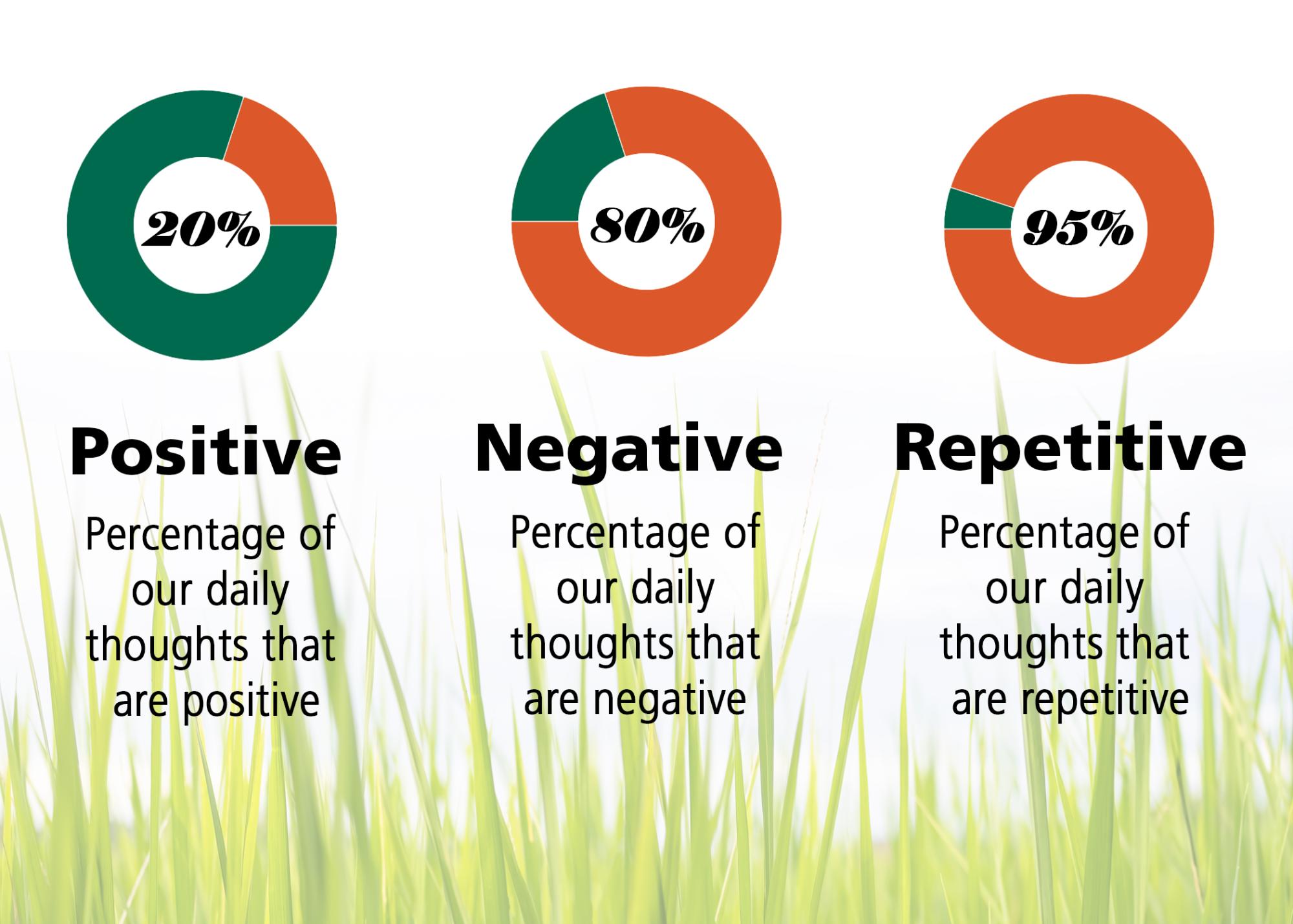
Consider this: The average adult has about 12,000 to 60,000 thoughts per day.
And 80% of them are negative.
We know positive thinking is good for your health. But what is positive thinking? And what are the effects of negative thinking?
Find the Silver Lining
Positive thinking means you approach unpleasantness in a positive and productive way. You think the best is going to happen, not the worst. Positive thinking can also be related to looking on the bright side or finding the silver lining. Not everything we do in life will be pleasant but looking at situations in a different light can certainly help you get through those tough times.
Positive thinking often starts with self-talk. Self-talk is the endless stream of unspoken thoughts that run through your head.
Here are some examples of negative vs. positive thinking:
I can’t do anything right. I will try my best.
I don’t know anything. I am willing to learn
I have always been this way. I am open to change.
This is too difficult. It sounds challenging but I will try my best.
Bad things always happen to me. Bad things happen but I always find a way.
I don’t like anything about myself. I am strong. I am loved. I am valued.
Do you see how changing a negative thought to a positive affirmation can help shift negative thoughts as well as promote self-confidence and well-being? If you find yourself thinking negatively, try countering that thought with a positive statement.
The Disadvantages of Negativity
Negative thinking can have a significant impact on various aspects of your life, including your mental and emotional well-being, physical health, relationships, and overall quality of life. Here are some of the potential effects of negative thinking:
- Physical Health Issues: Chronic stress can lead to a variety of physical health problems, including headaches, muscle tension, digestive issues, and weakened immune system.
- Mental Health Challenges: Persistent stress can take a toll on your mental health, leading to anxiety, depression, or other mood disorders. It can also exacerbate existing mental health conditions.
- Poor Decision Making: When under stress, people often make hasty decisions without carefully considering the consequences.
- Neglecting Self-Care: In the midst of stress, people often neglect self-care activities like exercise, proper nutrition, and relaxation techniques, all of which can help alleviate stress.
- Negative Thought Patterns: Chronic stress can foster negative thinking patterns, such as assuming the worst.
Tapping into the Power of Positive
Think about a time where you faced a difficulty and forged ahead with a positive mindset. We’re guessing you were likely able to adapt to the situation with a lot more grace and resiliency. Or perhaps you were able to think more creatively and be better at problem solving.
That positive thinking can help improve your health as well — stronger immune system, lower risk of depression, and reduced stress levels.
But how do you flip the switch? Here are some techniques to help you focus on the positives.
Visualization. This is a powerful tool to help you to manifest your future. You create a mental vision of where you want to be in the future. Not only is it a way to reprogram your mind, visualization can also help you get through a tough time. Headspace has an article about the benefits of this focused practice.
Meditation. Meditation, or mindfulness, can help you clear your mind and come back to the present moment. This is a helpful tool when you are in a stressful situation. It’s good to take a mindfulness moment, reset, and return with confidence. YouTube is a great place to start if you are looking for guided meditations.
Express Gratitude. Studies show that people who express gratitude are happier individuals. Remind yourself of how truly lucky you are: you woke up today, you are healthy, and you are strong. Make it a practice to write down three reasons you are grateful every morning or evening. Not sure what to write? Calm offers some prompts to get you started.
Audit Your Circle. If you surround yourself with positive people, it is easier to be a positive person. Recognize how you feel when you are with certain people in your life. Do they fill your cup, or drain it? It is important to have a circle of support that provides inspiration, motivation, and encouragement.
Learn from Failure. Rather than seeing failure as a dead end, positive thinkers view it as a stepping stone to success. Use the experience to move forward in a new way.
Encourage Others. Positive thinkers not only focus on their own well-being but also support and encourage others. Think back to your circle of support — how do you make others feel? Do you fill their cups, or drain them?
Look Where You Want to Go
Changing your mindset takes time, but it can be done.
Take driving as an example. When you are driving, you look where you want to go. If you turn your head to look at something on the side of the road, you will inevitably head in that direction.
So, by consciously choosing to look in the right direction and staying committed to your goals and values, you can steer your life toward the outcomes you desire.
Remember when you are looking for the negatives, you will find them and, when you look for the positives, you will find those, too. Keep your eyes on the positive.
Krista Bouchard is the Wellness Coordinator at HealthTrust. David Salois is the Benefits Services Manager at HealthTrust.