
The information contained in this article is not intended as legal advice and may no longer be accurate due to changes in the law. Consult NHMA's legal services or your municipal attorney.
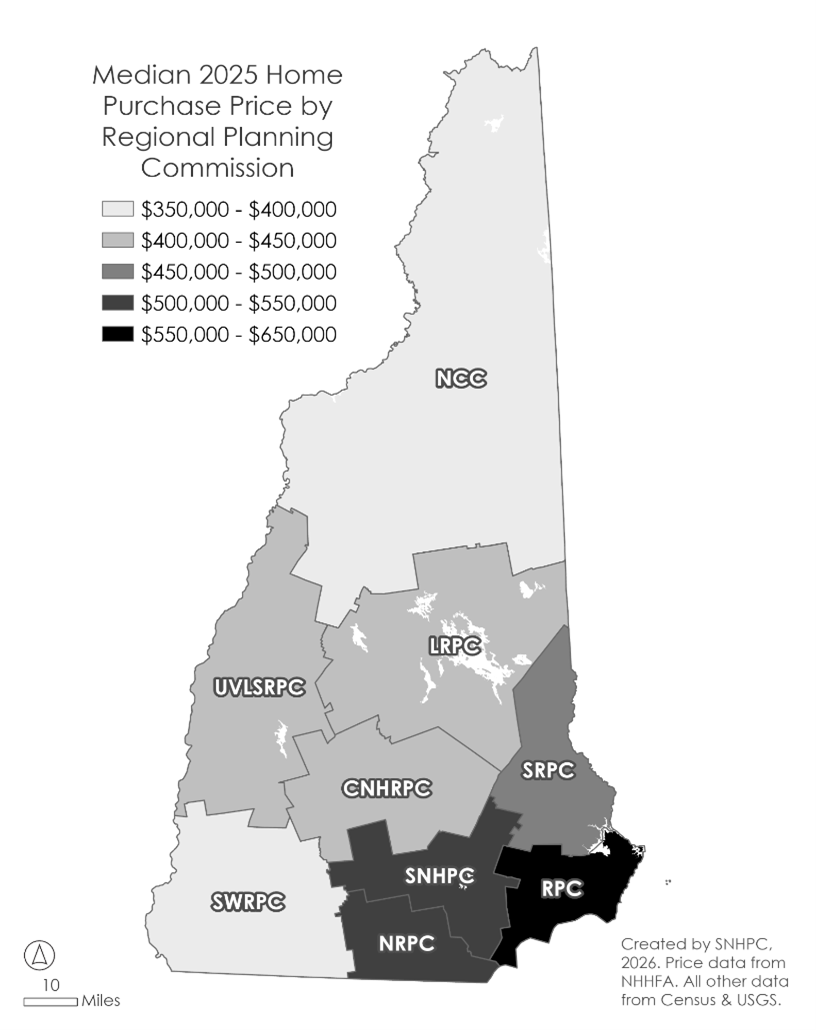
If you haven’t looked at housing availability and prices in New Hampshire for a while, it may be advisable to sit down and be prepared for serious sticker shock. What is available is minimal and the prices are often off the charts. Houses are commonly over a million dollars in many communities, and lots are often in the $200,000 range. Comparing the average home cost per region, one can clearly identify how the cost varies across the state. Note: the data represents all owner-occupied homes including manufactured, condos and single-family homes.
The need for more affordable and innovative housing solutions has been recognized by developers, employers, universities, planners, legislators, and of course, the consumers. Thanks to many out-of-the-box thinkers, there’s a movement gaining ground in New Hampshire for innovative housing solutions that focus on affordability through smaller units, smaller lots, sustainable building practices, prefabrication, shared amenities, and other cost saving techniques. Innovative housing appeals to people of all ages and abilities as they can be very efficiently built, are easier to maintain, provide a sense of community due to thoughtful site design, and are often pedestrian friendly.
In order to create innovative housing solutions, communities need some flexibility in zoning regulations such as building within commercial areas or allowing smaller setbacks. This is an era where innovation and allowances will result in much-needed affordable options for people of all ages, abilities, and various income levels. This article will provide a few examples of the state’s latest successful innovative housing options.
Cottage Court Housing
Cottage courts (or cottage clusters) are typically a set of small, detached single family dwelling units oriented around shared green space. The cottages themselves are modest in size, ranging anywhere from 400-1,200 sq ft. The minimum lot size and maximum lot coverage can be flexible as well, so cottage courts can adapt to a variety of zoning districts. 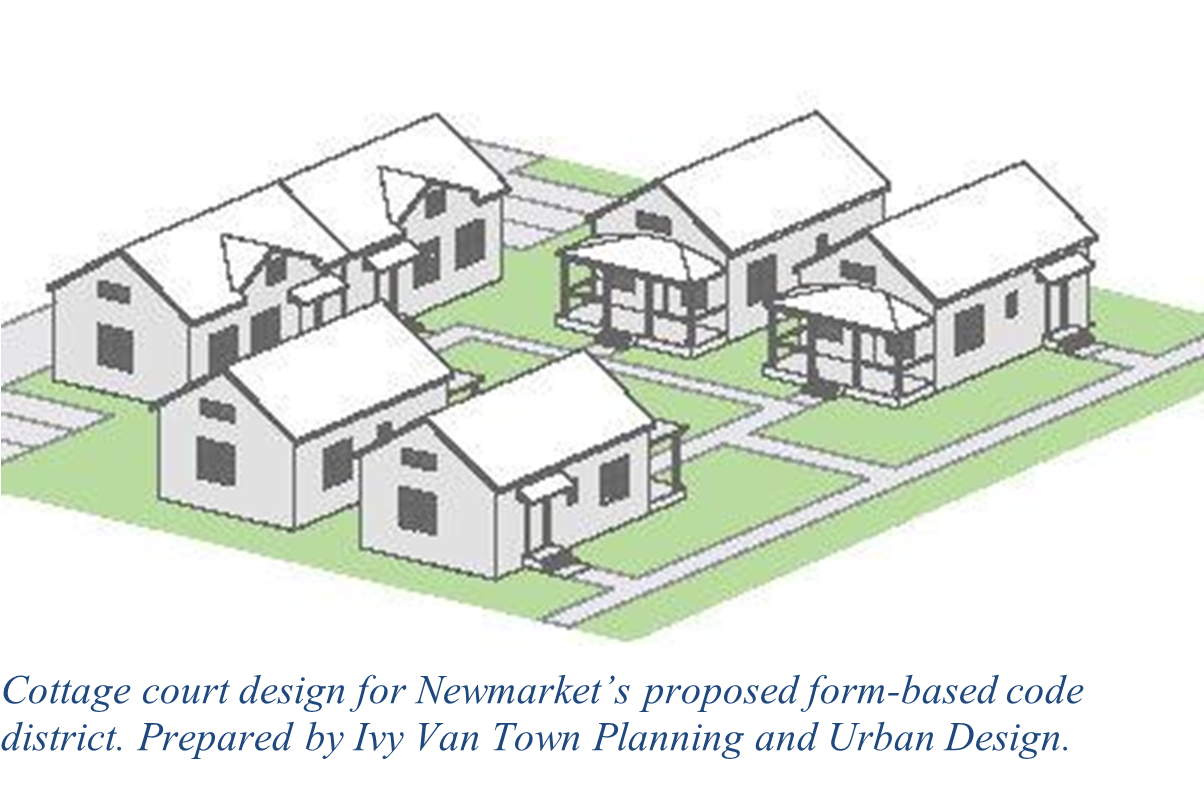
Cottage court developments occupy an interesting position in the missing middle housing spectrum. They are by all accounts single-family homes, however, the ratio of shared space on the overall lot and the modest square footage of the units are more akin to a multi-family configuration.
Municipalities across New Hampshire are utilizing cottage courts as an infill development opportunity that provides gentle density beyond single-family construction. In some municipalities, cottage courts are allowed by right whereas others are a conditional use permit. Both towns and cities are putting cottage court ordinances on the books. Cities like Keene and Claremont both added ordinances in 2024, while New London voted one in during the most recent elections.
Most ordinances are being applied across all residential and mixed-commercial zoning districts. While this type of housing configuration is most efficiently used on existing water and sewer, the shared open space that often triggers a need for an HOA agreement likewise supports shared well and septic infrastructure.
 At first glance, developers might balk at a cottage court development in favor of conventional multi-family housing that allows for greater density on the same size lot. Moreover, affordability might seem elusive when construction costs increase as more units are detached due in part to the need for each free-standing unit to have its own utilities versus a centralized mechanical room for multiple units. Still, land use regulations and construction methods can help offset some of the increased costs of cottage courts. Ensuring efficient land use by reducing parking minimums and setbacks can make the cost-per-unit lower for end-users. Incorporating low-impact stormwater management techniques into site plan regulations such as rain gardens can avoid expensive stormwater treatment infrastructure typically required for multifamily development.
Off-site construction can help reduce the cost of cottage courts. Focusing on modular development and limiting customization through stock plans can reduce the costs as much as 20% according to some estimates. Modular builders may even be willing to bring costs down even more if developments are coordinated across sites and units are purchased in bulk.
Given the aesthetics of cottage courts, the adaptability of the building typology for infill development in a variety of zoning districts, and the functionality of its use across the cycle of residential end-uses (i.e., from starter home to down-sizing), this housing type deserves a place within the innovative housing category.
Co-living
Co‑living is emerging as an innovative and pragmatic response to New Hampshire’s housing shortage, particularly in smaller cities where wages have not kept pace with rising rents. By rethinking how space is shared—private bedrooms paired with high‑quality communal kitchens and living areas—co‑living delivers dignity, safety, and affordability without sacrificing location or design. This model is especially well‑suited for downtowns with underutilized buildings, where adaptive reuse can simultaneously expand housing options and strengthen neighborhood vitality.
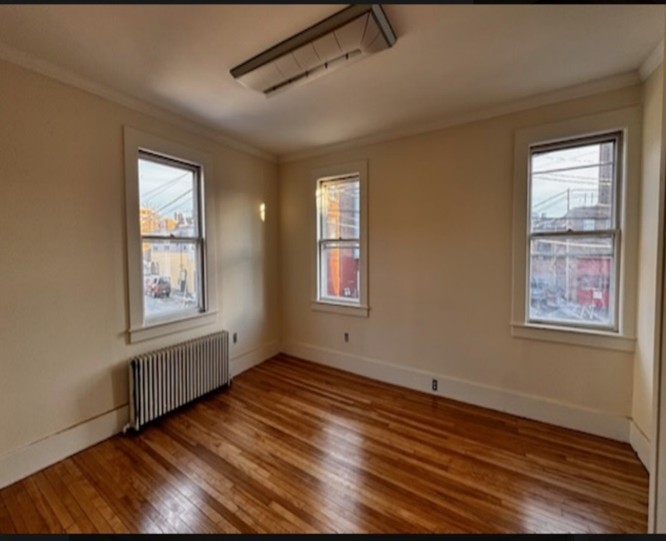
In downtown Keene, Belltower Property Management is managing an approved redevelopment project that exemplifies this approach. The long‑vacant professional building will be transformed into a mixed‑use property, with office space on the first floor and a four‑bedroom co‑living apartment above. The project includes substantial life‑safety and quality upgrades—such as a full sprinkler system, modern mechanical and electrical systems, a new shared kitchen, a full bathroom conversion, hardwood flooring, and low‑VOC interior finishes—resulting in warm, efficient, and code‑compliant housing. Reactivating this dormant property will also improve safety and activity along the block, reducing the impacts of vacancy while supporting downtown revitalization.
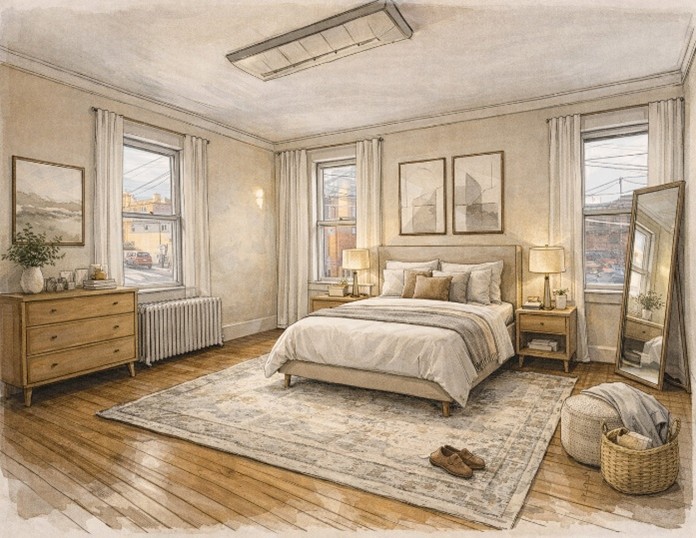 The affordability impact is concrete and measurable. This single property alone is expected to save tenants approximately $24,000–$44,000 annually compared to conventional rental alternatives. Fully furnished rooms will rent for $750–$895 per month, including utilities, fiber internet, and parking. At the most affordable tier, residents need to earn about $2,250 per month—or $27,000 per year—to meet standard rental eligibility guidelines, placing housing within reach for individuals just above 30% of the area median income. At roughly $13.50 per hour, a local worker can sustainably afford a room without a cosigner or special conditions—demonstrating how thoughtfully designed co‑living can bridge the gap between survival and stability in a strained housing market.
Accessory Dwelling Units: Small Homes, Flexible Housing
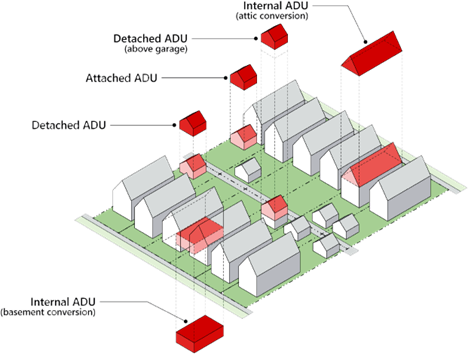
 Accessory Dwelling Units (ADUs) are emerging as one of the most flexible and practical ways to expand housing options in New Hampshire. An ADU is a small, independent living space located on the same lot as a single-family home. Sometimes called in-law apartments, garage apartments, or backyard cottages, these units can provide housing for aging parents, young adults, caregivers, or renters while allowing homeowners to make better use of existing properties. Because ADUs are typically smaller and built within established neighborhoods, they offer a way to incrementally increase housing supply and reduce pressure to build large-scale development and major infrastructure expansions.
Recent changes to state law have strengthened the role ADUs can play in addressing housing needs. In 2025, the Legislature adopted House Bill 577 (HB 577), which expanded New Hampshire’s ADU framework and requires municipalities to allow one ADU. ADUs are allowed either attached or detached, as a matter of right in any zoning district where single-family homes are permitted. By establishing a clearer statewide baseline, the law aims to reduce regulatory barriers while still allowing communities to maintain reasonable standards applied to single-family homes.
To help communities and homeowners navigate these opportunities, NH Housing hired the Southern New Hampshire Planning Commission (SNHPC) to help develop two ADU resources for the state. This includes the recently released New Hampshire Homeowner ADU Guide as well as the Policy and Program Models for Creating Accessory Dwelling Units in New Hampshire report. Both resources are available through NH Housing’s webpage dedicated to ADUs: https://www.nhhfa.org/housing-challenges-solutions/accessory-dwelling-units/
One innovation featured in the Homeowner ADU Guide highlights how new construction methods are expanding where, and how, ADUs can be built. In the town of Barrington, a manufactured ADU was built off-site and delivered to the property as a completed unit, then lifted into place by crane and set on its foundation in just a few hours. Off-site construction reduced on-site disruptions and made project delivery more predictable. As modular and prefabricated construction techniques continue to evolve, new approaches like this may offer a faster and potentially more cost-effective way for homeowners to quickly place ADUs in backyards all across existing neighborhoods in New Hampshire.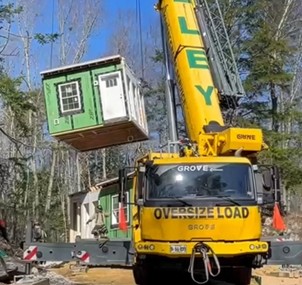
Local Housing Policy
Housing is a notoriously tricky issue to tackle at the local level. Cities and towns generally do not build housing, unless they are one of the 14 housing authorities in the state. Yet decisions made by municipalities – whether about zoning and land use regulations, infrastructure investment or community development priorities – all have huge implications about the ability of municipality to meet its housing goals. Determining what kind of housing a community wants, needs and can support requires information like demographics, housing data, and location and capacity of infrastructure. Much of this information is available in the 2023 New Hampshire Statewide housing Needs Assessment and the 2023 Regional Housing Needs Assessments developed by all nine NH regional planning commissions in accordance with RSA 36:47(II).
Information and data are important, however, having ongoing opportunities for public outreach and input are just as critical when making decisions about local housing policies. Simply put, decision makers should check in with residents to collaborate on housing goals before asking them to support zoning changes or to invest tax dollars into infrastructure improvements that enable more housing. Finding the local solutions that work for each municipality takes time and resources. Solving the housing needs of the state or even a region cannot be achieved by one or two communities, but rather by all municipalities examining needs, policies, and regulations on a larger holistic scale.
Since its launch in 2022, the InvestNH Housing Opportunity & Planning Grants (HOP) Program has provided over $4.3 million in grants to help over 70 municipalities analyze and update their land use regulations to increase housing opportunities. Within Rockingham Planning Commission’s (RPC) region alone this grant program provided 15 cities, towns and village districts over $900,000 in grant funds to help communities enable more housing with increased technical assistance. Work conducted by RPC specifically under these grants resulted in over 40 local housing conversations and surveys, nine local needs assessments, six master plan housing chapters, and nine housing regulatory audits. All of this work has culminated in local housing regulations shifting in nearly all the RPC communities with many using the options outlined below. The RPC region also had one of the highest amounts of new housing units permitted in recent years as noted in BEA Office of Planning and Developments Current Estimates and Trends in New Hampshire's Housing Supply – 2025 Update. The municipalities that increased housing and opportunities were those most engaged in having community conversations.
In addition to the work under the HOP Grants, RPC and other regional planning commissions have leveraged other funding resources to provide technical assistance to municipalities that are struggling to meet housing needs, keeping up with state mandates, and balancing broader community demands and costs. Some of this funding includes New Hampshire Community Development Finance Authority (CDFA) and US Department of Defense funds awarded to help deal with housing needs of the Portsmouth Naval Shipyard.
Much of the funding available to assist with local housing policy and infrastructure investment, including the HOP grants, has run out. Housing remains amongst the top issues facing communities in the state and many are on the cusp of regulation shifts and infrastructure investments. For example, the nine regional planning commissions traditionally used the $100,000 in Targeted Block Grants funds awarded by the Office of Planning and Development to provide support for local technical assistance on topics like housing. The current state budget has removed those limited funds - $11,111 per regional planning commission. To offset this, the Rockingham County Commissioners provided $11,111 in their budget to ensure RPC would be able to provide technical assistance on regional issues to municipalities.
To continue to move the needle forward on housing, NH communities need be able to continue to have good data, local conversation and technical assistance to enable supported housing policies and local infrastructure investments.