Supporting effective municipal government through education, training, advocacy, and legal services since 1941.

NHARPC CORNER: “Regional Cooperation Cleans Up Household Hazardous Waste” How Working Together on Costly Disposal Helps Municipalities Save Money
The information contained in this article is not intended as legal advice and may no longer be accurate due to changes in the law. Consult NHMA's legal services or your municipal attorney.
Introduction
Most waste is simple – reuse it, recycle it, or take it to the transfer station. But what about things you can’t simply toss – household cleaners, solvents, paints, stains, and the like? That’s where Household Hazardous Waste (HHW) collections play an important role in the waste stream. Giving residents an easy, readily available option to dispose of their dangerous waste is the best way to keep our lakes, rivers, and soils clean for future generations. Regional collections provide residents of every municipality, no matter how big or small, the chance to properly dispose of their HHW. Without these options, HHW ends up in the trash – or worse, abandoned alongside a road where it can pollute water, threaten human health, and harm wildlife.
Household Hazardous Waste are products that contain corrosive, flammable, toxic, or reactive ingredients. The most common items received at HHW collections include oil-based paints, solvents and thinners, automotive products (antifreeze, used oil, old gas), household cleaners, pesticides, herbicides, and aerosols.
Event Types
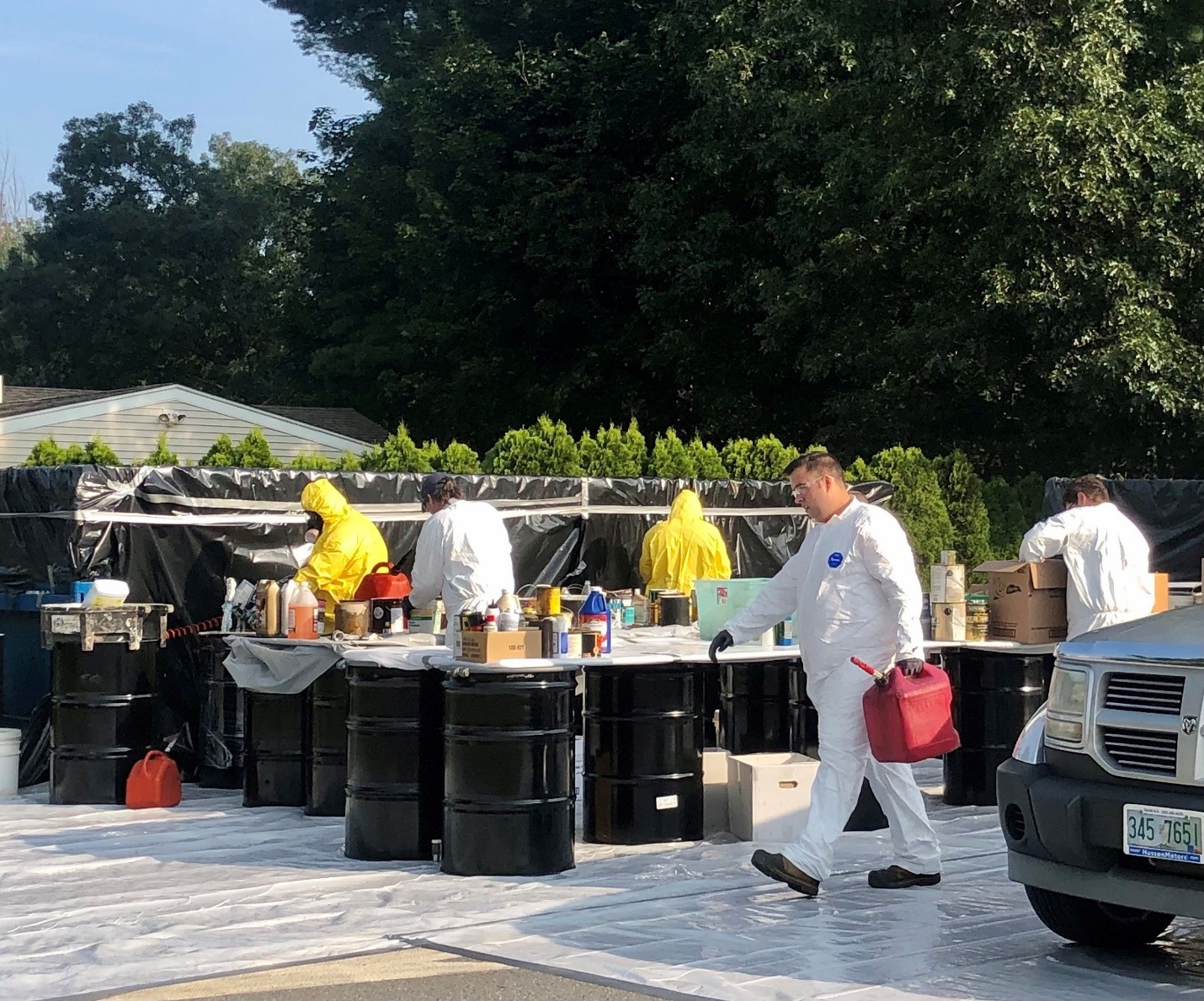
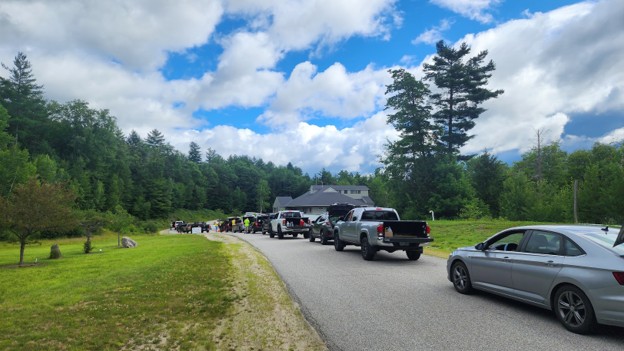
There are several HHW collection methods that municipalities can use. Single day pop-up events are typically held on publicly owned sites, such as parking lots, transfer stations, schools, fire stations, or public works buildings. Municipalities hire a qualified hazardous waste vendor to handle the HHW collection, transportation, and disposal of the materials collected. Currently, almost every HHW collection in NH is a single day event, and many are organized at the regional level, allowing residents of any participating municipality to bring their waste to any of the regional HHW collections that season.
A permanent HHW facility is operated in a set location on a regular schedule and can receive HHW from residents on a continuous basis. Residents enter the site and drive their cars under a covered unloading area. Staff come out to the car and unload the HHW materials onto a cart. Residents then exit the site. Next, staff log the materials and move them to a designated holding/sorting area. Once the materials are identified and sorted, they are either lab packed or bulked in the processing area. Materials are then moved to a main storage room and stored by hazard type. Flammables and other high hazard materials are moved from the main building to a prefabricated hazmat storage building. Finally, the materials are transported from the facility by a licensed hauler when storage capacity or storage time limits have been reached. Many cities and municipalities across the country operate such facilities.
Curbside HHW collection programs allow residents to dispose of their HHW directly from their home, rather than traveling to an event or a permanent HHW facility. Municipalities contract with a vendor to provide all aspects of curbside HHW service. Residents contact the vendor to schedule a home pick-up of their HHW items. The vendor sends a collection kit to the resident and the resident prepares their materials for collection. On the set collection date, the vendor picks up the packaged materials directly from the resident’s home. Curbside HHW pickup is offered year-round. While there are currently no examples of curbside HHW collection in NH, it is widely used across the country.
New Hampshire largely uses the regional pop-up collection model, which allows residents to participate on several different dates throughout the year. Inevitably, HHW collections receive calls from people outside the region urgently looking to dispose of HHW properly. In the Upper Valley Lake Sunapee region, there have been visitors from as far away as the Seacoast or Littleton because there were no upcoming collections and the resident had to dispose of their waste before a deadline (such as a home sale or move). Not all collections allow non-residents to participate for a fee. New Hampshire currently has no permanent facility for HHW collection in a central location, despite demand in all parts of the state. Development of such a facility would allow all New Hampshire residents an opportunity to safely dispose of their waste at any time of the year.
Cost Savings Through Regional Cooperation
HHW disposal is costly, but many municipalities find savings through the regional model. Single day events have fixed costs, such as set-up fees, dumpster costs, and vendor staff time, in addition to the HHW disposal charges. A relatively small, single day event can easily cost $20,000-$30,000, which is a large expense for a single municipality to bear. Regional models typically offer 5-6 single day events per year and residents from any participating town can bring their waste to any of the events. The costs of these events are divided between the participating municipalities, which makes them more affordable. Regions vary in terms of how they allocate the costs—some divide collection costs based on population while others base it on participation rates at the collection events.
While proper HHW disposal is costly, even under a regional model, improper storage or disposal of HHW can cost a municipality even more. Municipal transfer stations that hold HHW materials risk fines and may be considered a waste generator, which results in much more liability and administrative costs.
Examples of Regional Models Across the State
Nashua Region Solid Waste Management District
For most Nashua Regional Planning Commission (NRPC) communities, HHW collection events are conducted by the Nashua Region Solid Waste Management District (NRSWMD). The NRSWMD is a cooperative agreement among participating municipalities pursuant to RSA 149-M:19. Members include Amherst, Brookline, Hollis, Hudson, Litchfield, Merrimack, Milford, Mont Vernon, Nashua, Pelham, and Windham. The municipalities agree to work collectively to operate a regional HHW collection program.
Each member municipality appoints a Member Representative annually and may appoint an alternate. The District generally meets quarterly. NRPC provides day-to-day staff support, manages the district’s funds, staffs the collection events, and serves as fiscal agent for the District. The HHW program is funded through member assessments, a state grant, and a $20 per vehicle event fee.
The NRSWMD operates six HHW collections each year; four in Nashua, one in Milford, and one in Pelham. The events are open to residents from all member communities regardless of location.
Lakes Region Planning Commission Regional Collections

Lakes Region Planning Commission hosts a regional Household Hazardous Waste event each year which includes multiple satellite collections from June through September. Since 2024, attendance has increased at the majority of collection sites, especially during July and August. HHW collections have become more popular as hazardous waste disposal needs have increased. In 2024, the Regional Lakes Region HHW program collected 66,545 pounds of hazardous waste; this increased to 80,990 pounds of hazardous waste collected in 2025. Even though participation in the Lakes Region has increased, the only brick and mortar collection facility in the region closed (Wolfeboro Hazardous Waste Product Facility), which has created a gap for residents without other disposal options.
Why has Hazardous Waste Disposal Increased?
As home sales increased in New Hampshire over the past decade, it has become apparent that residents were storing large volumes of HHW that needed to be disposed of. A similar scenario often occurs when a loved one passes away and relatives find HHW when cleaning out the home.
Improved advertising has also played a role in increasing participation. Communities can reach their residents through social media groups, targeted online advertising to specific zip codes, municipal websites, newspaper articles, transfer station signage, library announcements, and road signs. In the Lakes Region, it has been noted that participation increases drastically when a community places road signs on high traffic areas two weeks before an event takes place.
Planning For the Future
Planning for how your residents dispose of their HHW is critical to keeping our natural environment clean. Many of us can remember stories from our parents or grandparents about the poor quality of lakes and rivers from decades of pollution. Through HHW programs, we have kept literal tons of poisonous chemicals out of our waterways and soil. No matter how big or small a municipality is, residents need a way to properly dispose of household hazardous waste. Partnering with neighboring municipalities is a cost-saving way to keep New Hampshire beautiful.
For information on HHW collection events across the state, visit https://www.des.nh.gov/waste/household-hazardous-waste. This site also provides resources on ways to dispose of waste that may not be accepted at HHW collections.