The information contained in this article is not intended as legal advice and may no longer be accurate due to changes in the law. Consult NHMA's legal services or your municipal attorney.
Whether you are new as a volunteer planner on a local land use board or you are a seasoned volunteer, every now and then, it’s likely you are looking for resources. Thanks to the internet, countless excellent resources are at your fingertips. Still, many volunteer planners enjoy in-person training opportunities, workshops and listening sessions, as well as a variety of hardcopy reference materials and maps. The following article outlines state and regional resources and provides a variety of resources for four of the current hot topics in the planning world.
State Resources for New and Existing Board Members:
The New Hampshire Department of Business and Economic Affairs (BEA) (https://www.nheconomy.com) through the Office of Planning and Development (OPD) offers many services to state, regional and local officials and interested New Hampshire residents relating to planning, zoning, and land use.
A great place for new and seasoned planning board members to start or refresh their knowledge on state statutes is OPD’s Planning Board Handbook (https://www.nheconomy.com/office-of-planning-and-development/resources/planning-board-handbook). The handbook is designed to serve as a guide to the organization, powers, duties and procedures of planning boards in New Hampshire. OPD has also drafted a similar handbook for Zoning Boards of Adjustment (ZBA) members to understand the rules that govern these roles (https://www.nheconomy.com/getmedia/80b7bb45-2a29-4ac8-b3d2-6437d5f06102/2024-ZBA-Handbook-FINAL.pdf). It serves as a guide in clarifying the board's rules, responsibilities, and quasi-judicial power. Both the Planning and Zoning Board handbooks are updated annually with legislative changes.
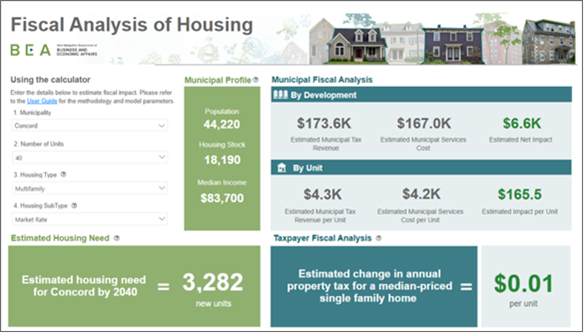
The latest BEA Planning tool is the Fiscal Analysis of Housing Calculator (https://www.nheconomy.com/office-of-planning-and-development/fiscal-housing-calculator). The calculator was created to assist municipalities and others in analyzing the effects of single-family, middle density, and multifamily housing development in making informed policy decisions.
OPD also hosts a Monthly Webinar Series, “Planning Lunches at Noon” (PLAN), every third Thursday from 12-1 pm, on a relevant or timely planning and zoning topic (https://www.nheconomy.com/office-of-planning-and-development/what-we-do/municipal-and-regional-planning-assistance/osi-planning-and-zoning-training/monthly-webinar-series). These lunch and learns are free to anyone and conducted live with a presentation and a Q&A session. All webinars are recorded and posted on OPD's YouTube Channel (https://www.youtube.com/@nhstateplanning/videos) where they can be easily accessed at any time for future reference. Additionally, for over thirty years, OPD has put on a Spring Planning and Zoning Conference (https://www.nheconomy.com/office-of-planning-and-development/what-we-do/municipal-and-regional-planning-assistance/osi-planning-and-zoning-conferences) which educates planning board and zoning board members on their essential duties as board members and how the boards on which they serve are supposed to operate.
OPD publishes a Zoning Amendment Calendar(https://www.nheconomy.com/office-of-planning-and-development/what-we-offer/zoning-amendment-calendars) every August, which outlines the dates by which zoning amendments need to be proposed and go to public hearing in towns. OPD also publishes a summation of changes in planning and zoning laws in September of every year (https://www.nheconomy.com/office-of-planning-and-development/resources/planning-and-zoning-legislation). There is also a resource page that provides links to other local and state planning, zoning, and land use subjects (https://www.nheconomy.com/office-of-planning-and-development/resources/planning-topics) and links to planning and zoning related chapters for easy reference (https://www.nheconomy.com/office-of-planning-and-development/resources/selected-land-use-regulation).
How Regional Planning Commissions Can Help:
Regional Planning Commissions (RPCs) offer volunteer planners a support network that they can tap into to learn about new planning topics, consult with planning professionals, and connect with valuable resources. RPCs are public, non-profit organizations authorized by NH RSA 36, formed by municipalities on a voluntary basis. There are nine RPCs across the state. Their mission is to advise and support municipalities within their region on planning and public policy issues, including land use, transportation, housing, economic development and more. To learn about the RPC in your area, visit: https://www.nharpc.org/
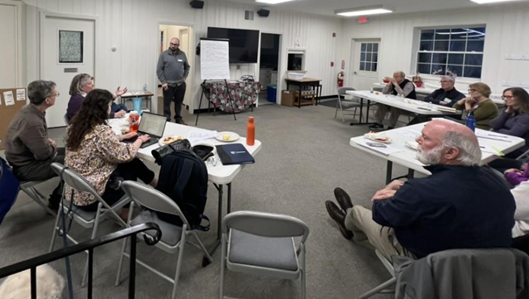
Each Planning Commission assists their member communities through a variety of educational opportunities. The Southwest Region Planning Commission (SWRPC) has been facilitating Citizen Planner Round Tables in which towns can learn from one another. (https://www.swrpc.org/citizen-planner-roundtables/) Over the last year, SWRPC staff have invited volunteer planning board members to discuss shared challenges, build a mutual support network, and to dig into specific planning topics together.
The RPCs also create interactive tools such as story maps to provide examples of positive planning work as well as resources to help keep planners up to speed with evolving policies and best practices. A recent example is Strafford Regional Planning Commission’s 2025 Legislative Toolkit (https://straffordrpcnh.gov/2025/08/18/srpc-publishes-2025-nh-legislative-toolkit/), which summarizes changes in state law that impact local planning issues. The Commissions also provide tailored technical assistance to volunteer land use boards. This year, utilizing the State’s Housing Opportunity Program funding, Rockingham Planning Commission assisted the Town of Hampton in developing and adopting an inclusionary housing ordinance, representing another step in addressing housing challenges and shortages in New Hampshire.
Hot Planning Topics in New Hampshire:
Although it was difficult to narrow our focus for this section on hot topic areas, the authors decided to include two uplifting planning areas and two more serious and difficult challenges. For the former, we felt that the love of New Hampshire’s farms and the ever-growing popularity and use of the state’s rail trails were great fits. For the latter, the mounting challenges related to the state’s housing shortage and the difficulty of dealing with contamination of forever chemicals such as PFAS were also good fits.
Agritourism: New Hampshire loves its farms and many them have become destinations for family-friendly events, especially during their harvest season. Farms and agriculture need the support of communities on many levels and there are several excellent ways planners and volunteer board members can support their local farms. First, ensure your master plan encourages and supports their local agriculture and farms. Second, create an Agriculture Commission, as demonstrated in the Town of Lee, whose mission is to "recognize, educate, promote, protect and encourage agriculture and agricultural resources throughout the Town”. Third, educate yourself on agritourism through several channels such as UNH and the NH Food Alliance. Finally, ensure that agricultural uses have flexible zoning allowances. Check out these resources for all these strategies.

Agritourism Resources:
- The NH Food Alliance: https://www.nhfoodalliance.org/agritourism
- The National Agricultural Law Center: https://nationalaglawcenter.org/overview/agritourism
- UNH Extension also has excellent resources such as this series of videos entitled, “Can Agritourism add to your bottom line?”: https://extension.unh.edu/resource/cultivating-farm-experiences-can-agritourism-add-your-bottom-line
- Agricultural Commission, Lee, NH: https://www.leenh.org/agricultural-commission
Rail Trails:
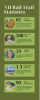
Rail trails are booming in New Hampshire, and their growing popularity reflects a broader shift toward outdoor recreation and community connectivity. These trails offer safe, scenic, and accessible spaces that support healthy lifestyles, connect people, and contribute to local economies. With over 380 miles of rail trails crisscrossing the state, they are well established and increasingly central to community planning.
To support their continued development, volunteer planners can draw on resources such as:
- NH Rail Trails Coalition (https://nhrtc.org/) for technical assistance and advocacy,
- Recreational Trail Program (https://www.nhstateparks.org/find-parks-trails/find-trails-maps-clubs/grants/recreational-trails-program) (RTP) for project funding (though federal support beyond 2026 is uncertain), and
- UNH Extension’s DIRT Initiative (https://www.nhstateparks.org/find-parks-trails/find-trails-maps-clubs/grants/recreational-trails-program) for collaboration and capacity building.
As Chuck Redfern stated in a NH Business Magazine article by Judi Currie in 2022, “Rails are popular with a wide range of outdoor enthusiasts because they are user-friendly,” capturing the broad appeal of these vital public assets (https://www.businessnhmagazine.com/article/popularity-of-nhrsquos-rail-trails-on-the-rise).
Housing Resources:
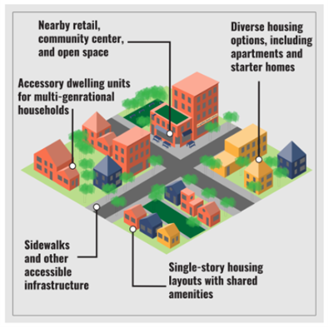
Housing has become a critical concern across New Hampshire as communities grapple with shortages, affordability
challenges, and changes in housing needs as shifts in the state’s demographics continue. Volunteer planners play a pivotal role in addressing these issues by adopting innovative local strategies and leveraging state-led tools tailored for diverse community contexts. The New Hampshire Housing Toolbox (https://nhhousingtoolbox.org/) offers 20 planning and zoning strategies, like accessory dwelling units, cluster housing, and adaptive reuse, that municipalities can implement to encourage housing production. Meanwhile, Housing Opportunity Planning (HOP) grants (https://www.nhhfa.org/wp-content/uploads/2025/02/nhh_case_study_2025.pdf) and Community Housing Navigator programs under InvestNH (https://www.nhhopgrants.org/) have funded regulatory audits, zoning updates, and facilitated engagement in over 98 small and mid-sized communities to date. Additional support comes from RPC Housing Snapshot Profiles produced by regional planning commissions using US Census data which provides recent data on demographics, housing stock, and local housing needs helping communities plan decisions and assess gaps. While not all regions have published snapshot profiles, all nine RPCs have developed Regional Housing Needs Assessment (RHNAs) that provide comprehensive data and policy recommendations to address housing needs at the regional scale (http://nharpc.org/rhna).
Explore Data Snapshots by Region:
- Strafford RPC: https://straffordrpcnh.gov/communities/
- Southwest RPC: https://www.swrpc.org/resources/data/community-snapshots/
- Central NH RPC: https://cnhrpc.org/gis-data/2010-census-data/
- North County Council: https://data-resource-hub-2-nccouncil.hub.arcgis.com/pages/data-snapshots
- Southern NH RPC: https://www.snhpc.org/community-economic-development/land-use-housing/pages/housing-needs-assessment
These resources empower volunteer planners to move from identifying housing challenges to implementing effective, context-specific solutions.
Groundwater Protection/PFAS:
PFAS (per- and polyfluoroalkyl substances) have emerged as a pressing groundwater concern for New Hampshire communities. These chemicals – often called “forever chemicals” – do not break down easily and have been detected in water supplies across the state. This is alarming because even extremely low concentrations of PFAS in drinking water (in the parts-per-trillion range) can pose health risks. Long-term exposure to PFAS has been linked to issues like elevated cholesterol, thyroid disorders, and even certain cancers, making it crucial to keep them out of public water.
Fortunately, resources are available to help towns navigate PFAS and groundwater protection. The NHDES PFAS Response website is a key hub for up-to-date information, mapping of contamination, and guidance on state response efforts. The NHDES Local Source Water Protection Grant Program (https://www.des.nh.gov/climate-and-sustainability/conservation-mitigation-and-restoration/source-water-protection/swp-grants) offers funding to municipalities for projects that protect drinking water sources (such as wellhead protection plans or ordinances). Local officials can also refer to the NH Department of Health and Human Services’ PFAS information for guidance on health risks and community outreach. In addition, the NHDES Model Groundwater Protection Ordinance (https://www.des.nh.gov/sites/g/files/ehbemt341/files/documents/wd-24-02.pdf) provides towns with a regulatory roadmap for protecting water resources from PFAS and other contaminants. By staying informed and taking advantage of these resources, New Hampshire towns and cities can be proactive in keeping their groundwater – and residents – safe from PFAS.
These examples represent a thin slice of how the State and RPCs can assist volunteer planners. For a more in-depth discussion on the topic, consider attending the New Hampshire Municipal Association’s Annual Conference on November 19th and 20th (https://www.nhmunicipal.org/nhmas-84th-annual-conference-and-exhibition). The authors will be participating on a panel (11/20 at 1:30) to share additional ways they support volunteer planners across the state.